The Cost of Marketing Decisions You Never Make
The most expensive marketing decision is often the one you never make. Putting off a new website, an ad test or a clearer message feels safe, but indecision has a real cost: missed customers, wasted months and competitors who decide first. The fix is deciding with good enough information, then adjusting as you learn.
Our partner John Graham Seeliger asked the question in one of his posts: "What was your worst decision?" His answer: "The one you never made."
It lands because most owners can name one. The website they meant to redo three years ago. The ads they were going to try "after the busy season." The referral program that's still a note on a legal pad.
Why is not deciding so costly in marketing?
Because the cost is invisible. A bad ad shows up on your credit card statement. A decision you never made doesn't show up anywhere. You never see the customers who didn't find you, the calls that went to a competitor or the months that slipped by.
Indecision also stacks. An outdated website makes your ads less effective. Unclear messaging makes your networking harder. Each delay quietly drags down everything else you're doing.
And the market doesn't wait. While you're thinking it over, someone in your category in Chandler or Gilbert is making the call, launching the thing and learning from it.
What marketing decisions do small businesses put off most?
In our experience, the same handful come up again and again:
- Redoing the website. It's "fine," but it's slow, dated or doesn't say clearly what you do.
- Testing paid ads. The owner worries about wasting money, so no test ever runs and nobody learns what works.
- Picking a target customer. Trying to appeal to everyone feels safer than choosing, so the message stays vague.
- Raising prices or repackaging services. It feels too risky to touch, so margins quietly shrink.
- Asking for reviews. Easy, free and still somehow never happens.
- Hiring help. The owner does it all alone, slowly, because choosing someone feels like a big commitment.
None of these are hard decisions on their own. They feel hard because they never get a deadline.
There's usually a story attached, too. "We'll do the website after the new logo." "We'll run ads once things settle down." "We'll ask for reviews when we have a system." Each reason sounds sensible. Stacked together, they become a wall. Say you run a moving company in Queen Creek and you've been "about to" update your website for two years. That's two years of potential customers landing on a page that doesn't help them choose you.
How much information do you need before you decide?
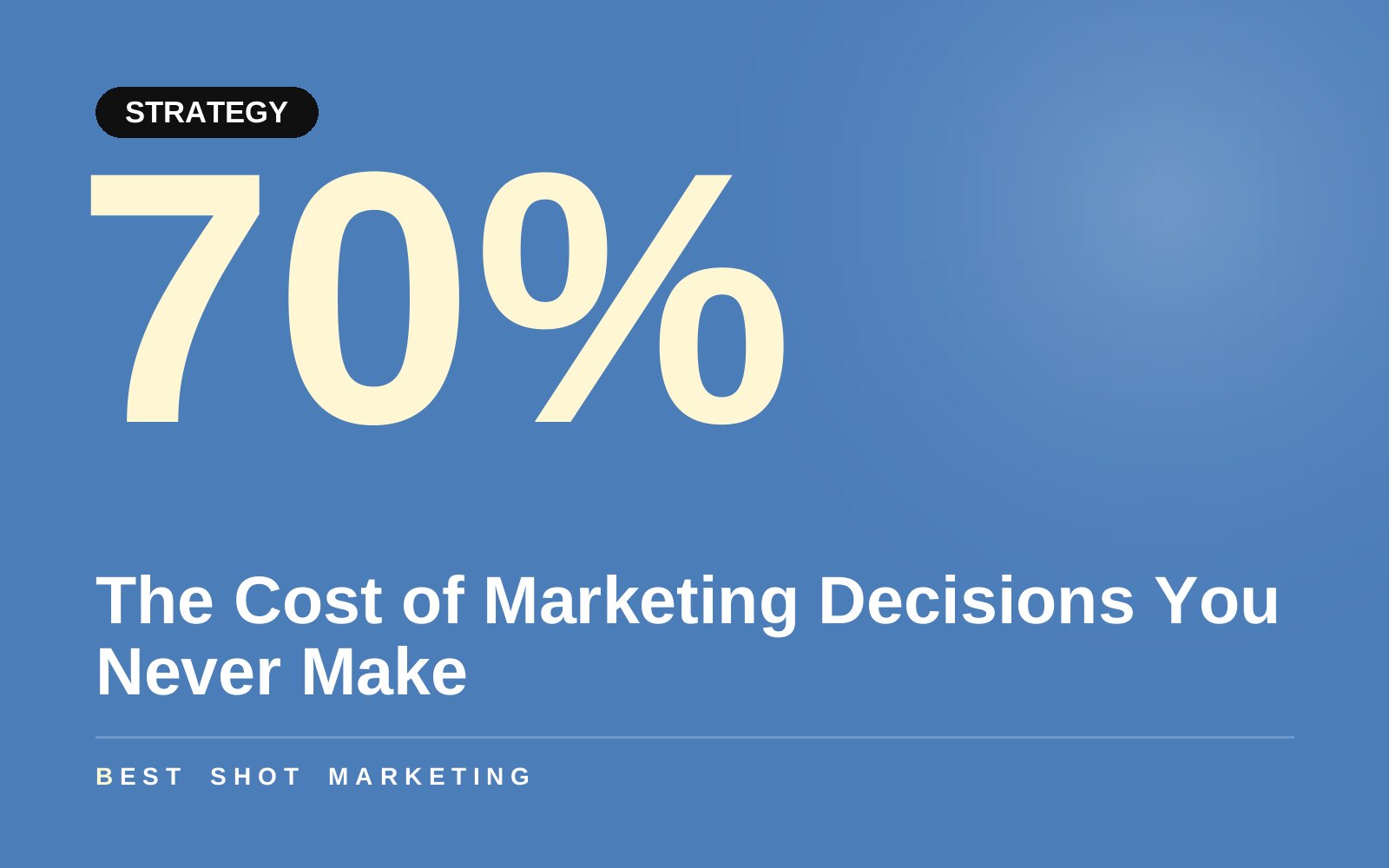
Less than you think. In his 2016 letter to Amazon shareholders, Jeff Bezos argued that most decisions should be made with about 70% of the information you wish you had. If you wait for 90%, in most cases you're probably being slow.
That idea fits small business marketing well. You'll never know for sure how an ad will perform until it runs. You'll never know for sure whether a new website will bring more calls until it's live. Waiting for certainty is just a polite way of not deciding.
Seventy percent means you know your goal, you know roughly who you're trying to reach and you have a sensible budget. That's enough to start. If the goal part is fuzzy, read our post on why you should start with the goal, not the tactic.
How do you make a marketing decision faster without being reckless?
Give the decision a shape. Here's a simple process:
- Write down the decision. One sentence. "Do we run Google Ads for our AC repair service in Mesa this summer?"
- Name the goal. What would a good result look like? Calls, booked jobs, revenue.
- Set a limit. How much money and time are you willing to risk to find out?
- Pick a deadline. Decide by a specific date and put it on the calendar.
- Plan the check-in. When will you look at the results, and what will you do if they're good or bad?
This turns a vague worry into a small, controlled experiment. Small experiments are easy to say yes to.
It also takes the emotion out of it. You're not betting the business on one choice. You're buying information at a price you already agreed was fair.
What if you make the wrong marketing decision?
Then you'll know something you didn't know before. Most marketing decisions are reversible. You can pause an ad. You can change a headline. You can rewrite a page.
The decisions that deserve slow, careful thought are the ones that are hard to undo, like signing a long contract or rebranding the whole company. Almost everything else can be tested, measured and adjusted.
That's how we approach it at Best Shot Marketing: keep what works, fix what slips and shut down what fails fast to protect the budget. A wrong call caught early is cheap. A right call never made is expensive.
If waiting for perfect timing is your main holdup, our post on the perfect time to start marketing is written for you.
The bottom line
Every month you put off a marketing decision, you're still making one. You're deciding to keep things exactly the way they are.
Pick the decision you've been avoiding the longest. Give it a goal, a limit and a deadline, and make the call with the information you have.
If you'd like help sorting out which decision matters most, our Strategy Session is built for exactly that. Or let's talk strategies and figure out your next move together.
Frequently asked questions
What does indecision cost a small business in marketing?
Indecision costs you customers who never find you, months of lost momentum and ground given to competitors who act first. These costs are invisible because they never appear on a statement, which is why they are so easy to ignore.
How much information do I need before making a marketing decision?
Usually less than you think. Jeff Bezos argued in Amazon's 2016 shareholder letter that most decisions should be made with about 70% of the information you wish you had, because waiting for 90% is usually too slow. For most small business marketing, knowing your goal, your audience and your budget is enough to start.
How can a Chandler business owner stop putting off a new website?
Write down the decision, name the goal the website should reach, set a budget and pick a firm date to decide. Breaking it into those steps turns a vague project into a clear choice you can make this month.
Can a Strategy Session help me make marketing decisions faster?
Yes. The Best Shot Marketing Strategy Session is a deep dive into your goals, your message and the most efficient direction, so you leave knowing which decisions matter most and what to do first. It replaces guesswork with a clear, prioritized plan.
Which marketing decisions deserve the most careful thought?
Decisions that are hard to undo, such as long contracts or a full rebrand, deserve slow and careful thought. Most others, like testing an ad or rewriting a page, are easy to reverse and should be made quickly and adjusted as you learn.